


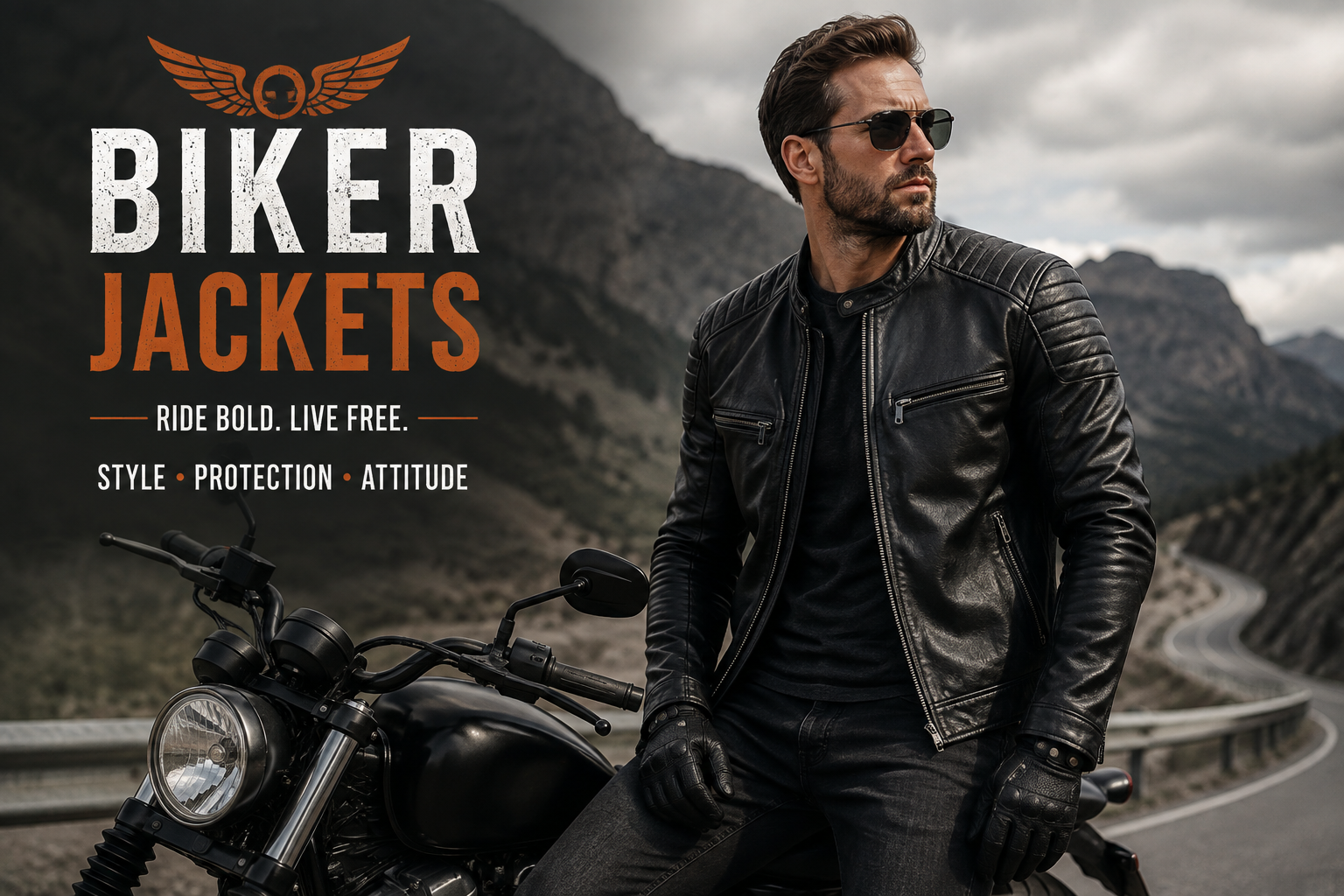

The Biker Jacket Trend: Why It Still Owns 2026
Jacket Sports
The jacket that refuses to leave
There is a moment, late in the evening, when the streetlights start to hum and the air turns sharp. You see a silhouette leaning against a parked car. Zip open, collar up, hands in pockets. You don’t need to see the face. The jacket tells you everything.
The biker jacket has done this for nearly a century. It has survived rebellion, reinvention, runway purges and a few dozen “this is the end of leather” headlines. And yet here it is in 2026, sitting at the centre of almost every serious wardrobe conversation.
This guide is for anyone who has stood in front of a mirror wondering whether the look is still worth it. Spoiler: it is. But the way you choose and wear one has changed.
How the biker jacket became a global language
The original design came out of motorcycle culture. Asymmetric zip, snap collar, a belted waist and plenty of room to move. Function came first. Nobody was thinking about editorial spreads.
Then film took over. Actors and rebels on screen gave the jacket a personality, and it spread from motorcycle clubs to city streets. Musicians picked it up, then photographers, then every youth culture that wanted a uniform without a uniform’s stiffness.
What makes it so durable is how easily it translates. A biker jacket can sit beside a sharp suit or a slip dress. It reads as tough in one outfit and effortless in another. Few garments carry that kind of range.
The rise of the biker jacket in modern fashion
Fashion cycles usually run on exhaustion. People get tired of a silhouette and move on. The biker jacket never fully exited because each generation reinterpreted it.
In the last few seasons, designers have softened the edges. You now see cropped versions, longer coats, metallic finishes and more relaxed shoulders. Street style followed, and social feeds did the rest. A good biker jacket photographs beautifully, and images travel fast.
There is also a practical reason. Many people now buy fewer, better pieces. A biker jacket earns its place because it works with jeans, dresses, joggers and tailoring alike. That kind of versatility is hard to beat.
Why the biker jacket went viral again
No single post explains it. A few shifts converged.
Texture is the new statement. After years of loud logos, a well-cut leather jacket feels confident without shouting.
The look is cinematic by default. Leather catches light in a way that flatters camera work. A three-second clip of a jacket swinging into frame can do more than a full caption.
Menswear and womenswear blurred. Cuts that once read as strictly masculine now appear in relaxed, feminine silhouettes. The result is wider appeal and more people willing to try one.
Vintage culture went mainstream. Worn-in leather with a bit of patina feels authentic. People want pieces that look like they have a history, even if they are new.
Biker jacket styles fans love most
Not all biker jackets are built the same. Knowing the main styles helps you shop with intention.
The classic leather biker jacket
This is the original: asymmetric zip, structured collar, belted or fitted hem. Heavier leather gives it a sharp, sculpted look that holds its shape over time. It is the one to buy if you want a jacket that will last a decade.
The lightweight leather biker jacket
Thinner leather or softer finishes make this version easier to wear across seasons. It drapes more naturally, works well for spring evenings and layers under a coat in winter. If you live somewhere mild, or you want something less bulky, start here.
The cloth or light biker jacket
Not every biker needs to be leather. Cotton twill, nylon blends and brushed fabrics bring the silhouette into everyday territory. They suit lighter climates, travel and anyone who wants the shape without the weight. A cloth biker jacket is often the easiest entry point for a first purchase.
The cropped and cool motorcycle style
Shorter lengths and bold hardware push the look toward something more playful. Metallic zips, contrast stitching and a cropped hem pair well with high-waisted trousers and tailored skirts. It is a cool, youthful interpretation that still respects the original.
The heavy duty biker jacket
Thick hide, reinforced seams and substantial hardware. This is the most protective and dramatic version. It takes time to break in, but the payoff is a jacket that looks more lived-in each year. Best for riders and anyone who wants a true statement piece.
Oversized vs fitted: choosing the right cut
This is where most people go wrong, so it deserves some attention.
Fitted biker jackets
A fitted cut keeps the silhouette sharp. The shoulders sit where they should, the sleeves end at the wrist bone, and the body follows your frame without pulling. It looks deliberate and works well with tailoring, slim denim and structured bags. If you prefer a polished, editorial look, fitted is your friend.
The warning sign: if you can’t raise your arms comfortably or the zip strains across the chest, it is too tight, and leather will not stretch enough to rescue it.
Oversized biker jackets
Oversized is the current favourite. The shoulders drop, the sleeves get longer, and the jacket sits more loosely. It feels relaxed and a little rebellious. It pairs beautifully with wide-leg trousers, bike shorts or a slip skirt.
The trick is balance. Keep the rest of the outfit streamlined so the jacket can be the volume. If the jacket is oversized, let the bottoms be fitted or structured. Otherwise you risk looking swamped.
Best colours and materials for biker jacket fashion
Colours that earn their place
Black is the classic, and it will never look wrong. But chocolate brown, deep oxblood and olive are doing excellent work right now. Brown reads warmer and works with denim and cream knitwear. Oxblood adds a quiet richness to grey and black outfits. Olive feels unexpectedly fresh with white and khaki.
If you are buying your first jacket, black or dark brown gives you the most options. Save the bolder shades for your second.
Materials to consider
- Full-grain or top-grain leather: Durable, develops patina over time, and feels substantial. Ideal for a long-term piece.
- Lambskin: Soft, supple and light. Excellent for everyday wear, though it needs a bit more care.
- Cowhide: Sturdy and structured. Holds its shape well and suits heavier styles.
- Faux or vegan leather: Lighter on the wallet and kinder to animals. Quality varies widely, so check the finish, stitching and weight before you buy.
- Cloth and blends: Breathable, easy to wash and perfect for layering in warmer months.
When you shop, look for clear information about the material and finish. Vague descriptions usually mean vague quality.
How to style a biker jacket without trying too hard
The biker jacket already has personality. Your job is to let it breathe.
Weekend ease: Black biker over a plain white tee, straight-leg denim and white sneakers. Simple, clean, complete.
Evening edge: Oxblood biker over a fine knit, slim black trousers and pointed boots. The jacket does the talking.
Office-friendly: A cropped biker over a silk blouse and tailored trousers. It shows you can mix toughness with polish.
Summer layering: A lightweight cloth biker over a linen shirt, with shorts or a midi skirt. Easy and relaxed.
A few practical rules to keep in mind:
- Keep one statement piece. If the jacket is bold, keep shoes and accessories quieter.
- Mind your proportions. Oversized jacket, streamlined bottoms. Fitted jacket, a little more volume below.
- Let the zip be seen. Leave it open or half-open for a more relaxed look.
- Test it with your everyday basics first. A jacket you can wear constantly will earn its money faster than one that needs a special occasion.
Why biker jackets are dominating 2026
The look feels right for this moment. People want clothes that feel personal, durable and expressive without requiring a costume. The biker jacket checks each box.
It also suits the way people shop now. Many buyers research carefully, compare materials and look for pieces that will last several seasons. A good biker is an investment that still feels exciting every time you pull it on.
And it carries a sense of attitude that is hard to fake. It says you have an opinion without needing to explain it.
Final thoughts from the editors
The biker jacket has never really needed permission. It arrived on motorcycles, moved into cinema, and settled into streets around the world. Every few years someone declares it finished, and every few years it returns with sharper lines and better leather.
If you are ready to find your own, start with fit, then colour, then material. Take your time with the cut. Think about where you will wear it most. And when you find the one that makes you stand a little taller, you will understand why this jacket has outlasted every trend that tried to replace it.
Jacket Sports has built its collection around exactly this idea: pieces with character, made to be worn hard and loved for years. Wherever your style lives, the biker jacket is a good place to begin. Even the Jacket Craze crowd would agree.
Frequently asked questions
Is a leather biker jacket worth the price? Often, yes. Quality leather lasts for years and improves with wear. Check the material, stitching and hardware before you buy, and choose a cut you will reach for often.
What is the difference between a biker jacket and a bomber jacket? A biker jacket usually has a asymmetric front zip, a snap or structured collar and a more fitted, edgy shape. Bombers tend to have ribbed cuffs and hems, a zip-front and a looser, rounder silhouette.
Can I wear a biker jacket if I am petite or tall? Absolutely. Petite wearers often do well with cropped or fitted cuts that keep proportions balanced. Taller wearers can take advantage of longer lengths and oversized fits. The key is shoulder fit, which is harder to alter than sleeve length.
Write a review


 TodayClosed Now!09:00 AM - 05:00 PM
- Monday09:00 AM - 05:00 PM
- Tuesday09:00 AM - 05:00 PM
- Wednesday09:00 AM - 05:00 PM
- Thursday09:00 AM - 05:00 PM
- Friday09:00 AM - 05:00 PM
 Own or work here?
Claim Now!
Claim Now!
